The Difficulty of Hiring and Team Design When Scaling a Product Org
Scaling a product org is less about headcount and more about how the work is split. The hiring mistakes show up first.
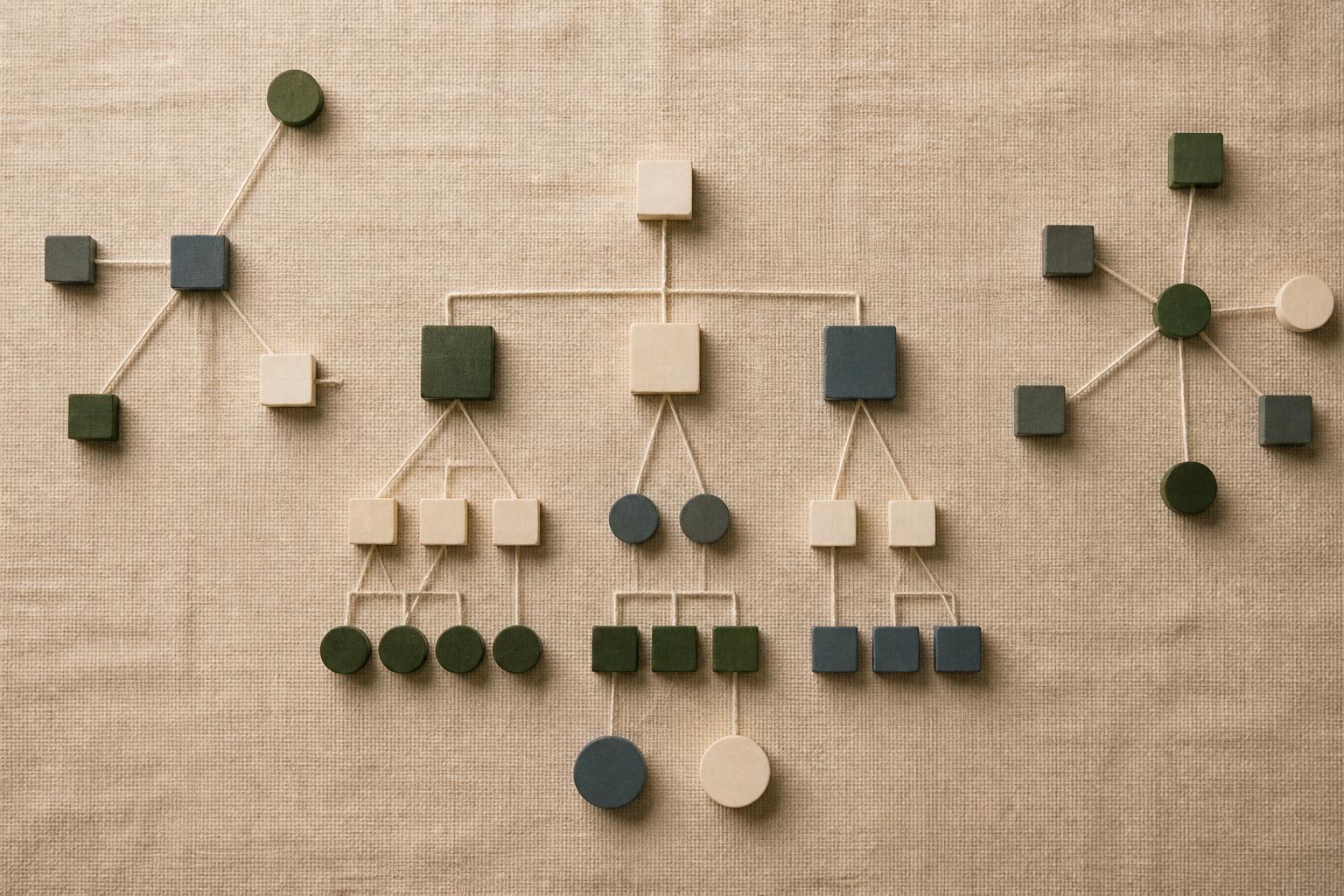
Growth changes the shape of the work faster than it changes the size of the team. A product org that scales from ten to thirty or fifty people does not just do more of the same thing. The work itself splits. Strategy separates from execution. Domain knowledge deepens. Coordination becomes its own job. And hiring, the thing everyone assumes will fix the pressure, becomes the slowest, most visible bottleneck.
This is where a lot of companies get stuck. They hire good people into the wrong structure, then wonder why velocity stalls.
The structure shows up before the people
When a product team is small, everyone does a bit of everything. The same person can shape the strategy, run discovery, and keep the sprint moving. That flexibility is a feature, not a bug. But it does not survive scale.
As the org grows, the work needs clearer boundaries. Not silos. Boundaries. The difference matters. Silos hide information. Boundaries make ownership explicit. The question is no longer "who is on the product team?" It is "what is each layer of the product org responsible for?"
We usually see four layers emerge:
- Product leadership sets the bar for strategy, decides what to stop, and shapes the operating system.
- Group or domain leads translate direction into coherent portfolios and keep teams from pulling in different directions.
- Product managers own outcomes within a clear domain, working with design and engineering as a triad.
- Specialists (research, analytics, ops, enablement) support the teams without owning delivery.
The mistake is skipping a layer. A VP of Product trying to manage ten individual PMs directly is not a flat structure. It is a missing layer. And the missing layer shows up as noise: too many priorities, conflicting decisions, and leaders who spend their week in status meetings instead of shaping the product.
Hiring is a design problem disguised as a talent problem
Most hiring pain is not a shortage of good candidates. It is a shortage of clarity about what the person is supposed to do.
We have seen companies take six months to hire a senior product leader because each interviewer wants something different. Engineering wants a delivery partner. Sales wants a roadmap advocate. The CEO wants a mini-CEO. The CEO is not wrong, but the role cannot be all three at once. The hiring process becomes a negotiation the candidate never sees, and the best people walk away.
Before you write a job description, define the shape of the job:
- What decision will this person own in full?
- What decisions will they influence but not own?
- What gap in the current team are they filling, not just what skills are they adding?
- How will we know if the hire is working in the first 90 days?
If you cannot answer these, the job description is a wish list, not a spec. And wish-list hires almost always drift.
The senior-by-default trap
Another common pattern is hiring senior people for every role. The logic is understandable: senior people need less management, move faster, and bring pattern recognition. But there is a trap. A team of only senior operators can become a team of people who are all used to owning the whole picture. They clash over scope, duplicate effort, and under-invest in the less visible work that makes a scaled org run.
Seniority also has to be distributed correctly. A senior PM in a team with no clear domain or no triad partner is a waste. A senior designer with no access to research or user context will do beautiful work that misses the mark. A senior engineering lead with no product counterpart will optimize the system toward elegance instead of outcomes.
The right mix is senior where the org needs judgment and ownership, and strong mid-level talent where the work is clearer and repeatable. The shape of seniority matters more than the average title level.
What to watch for as you scale
There are a few early signals that team design is drifting ahead of the actual work:
- Roles are defined by title, not by decision rights. A "Director of Product" who cannot stop a project is not a director. A title without authority creates confusion, not leverage.
- The best people are the busiest. If the same three people are involved in every important decision, you have not scaled decision-making. You have just scaled the number of meetings those people attend.
- New hires feel invisible for their first six months. That usually means onboarding is under-invested, or the job was never clearly scoped enough to show quick wins.
- Domain boundaries keep moving. Teams shift ownership every quarter. Accountability cannot form, and people optimize for short-term survival instead of long-term outcomes.
What the fix looks like
Fixing the team is slower than hiring a person. It requires editing the structure, not just adding to it. The best org redesigns we have seen share a few qualities:
They start with the work, not the headcount. Map the decisions that need to be made, then decide who should make them. Headcount follows from that.
They name the tradeoffs. Every structural choice has a cost. Cross-functional pods reduce handoffs but increase duplication. Platform teams create leverage but slow down local teams. Centralized research gives consistency but can starve edge teams. Be honest about what you are choosing.
They hire behind the structure, not ahead of it. Bring people in once the role has a clear owner, a clear neighbor, and a clear measure of success. Otherwise you are hiring someone to figure out what their job is, which is expensive and unfair.
They protect the triad. Product, design, and engineering should be a unit. The fastest way to break a product org is to turn one of those functions into a service desk for the others.
The hard question
If you are scaling a product org, the most useful question is not "who do we need to hire next?" It is "what decision or handoff is currently breaking, and what structure would make it reliable?"
Hire to that answer, and the team grows stronger. Hire around the panic, and you will keep adding people who all agree the work is hard but nobody can say why.