When Roadmaps Look Like Lists
A roadmap that is just a list of features is a forecast of disappointment. Here's how to turn it into a set of bets.
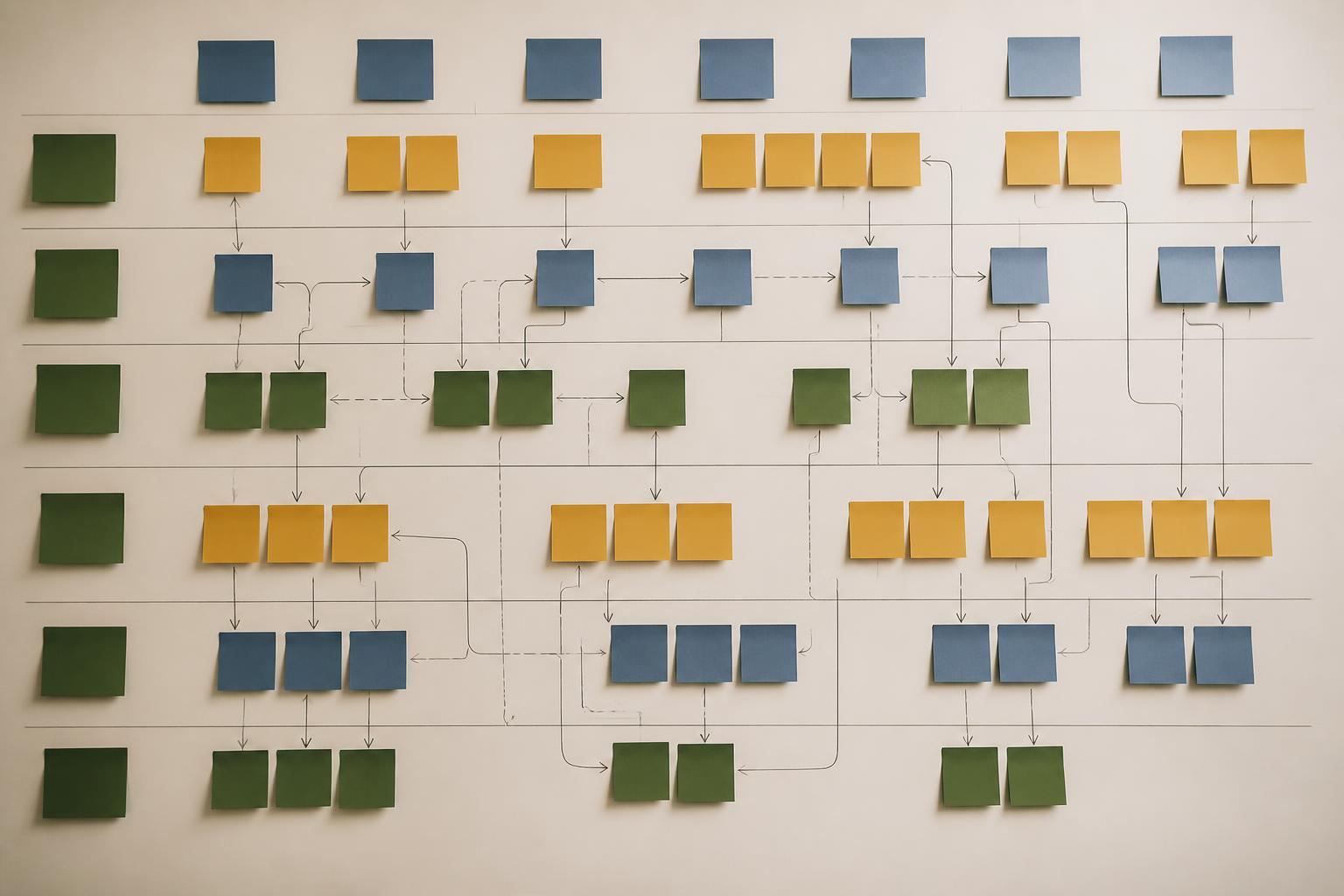
Most roadmaps I see are not strategies. They are inventories. A list of features, sorted by urgency, with dates attached. They answer the question "What are we building?" but not the more important questions: "Why does this matter?" and "What are we giving up to do it?"
When a roadmap looks like a list, the team optimizes for shipping. That feels productive, but it hides the real risk: building the wrong things well.
The difference between a list and a set of bets
A list says: here is what we are doing. A set of bets says: here is what we believe, here is what we are risking, and here is how we will know if we are wrong.
The shift is subtle but important. A list assumes certainty. A bet admits uncertainty. A list is managed by deadline. A bet is managed by evidence.
A good roadmap has a few qualities:
- It is small enough to be memorable. If you cannot recite your top priorities in a sentence, you have too many.
- It names the tradeoff. For every priority, there is something you are not doing. Say it out loud.
- It separates outcomes from outputs. "Launch dashboard" is an output. "Reduce time-to-decision for ops leaders" is an outcome.
- It has a kill criteria. Every bet should have a signal that tells you to stop, not just a milestone that tells you to keep going.
Why this is hard in practice
Most companies do not lack good ideas. They lack the discipline to say no. Roadmaps become lists because lists are easier to negotiate. Everyone gets something in. The product leader gets cover. The team gets a plan. The board gets a forecast.
But the cover does not last. Six months in, the list is half-done, morale is down, and the strategic bets have been crowded out by the urgent and the obvious.
A practical test
Look at your current roadmap. For each item, ask:
- If this works, what changes for the customer or the business?
- If it does not work, what will we learn?
- What are we not doing because we are doing this?
If an item does not have a clear answer to all three, it is not a bet. It is noise.
The leader's job
The product leader's job is not to own the roadmap. It is to create the conditions where the team can make good bets. That means a clear strategy, a visible budget of attention, and a culture where stopping a bet is celebrated as much as starting one.
When you treat the roadmap as a portfolio of bets, the conversation changes. Instead of arguing about what gets built, you argue about what you believe and what you are willing to risk. That is the conversation that actually shapes the product.